Hosted by the Oxford Martin AI Governance Initiative (AIGI) and the Department of Engineering Science at the University of Oxford, the programme is a first-of-its-kind effort to bridge the gap between cutting-edge AI research and effective governance.

AI governance requires not only thoughtful policy design but also deep technical understanding. Yet, training and research at this intersection have been chronically underdeveloped. Our programme addresses this need by bringing together leading researchers from engineering, computer science, and policy to advance the technical foundations of safe, accountable, and well-governed AI systems. By combining cutting-edge science with real-world policy insight, it seeks to deliver practical solutions to some of the most pressing challenges of our time.
We conduct high-impact, interdisciplinary research on the technical dimensions of AI governance in collaboration with DPhil students and faculty members in Computer Science and Engineering. We aim to build the world’s leading centre for technical AI governance research and training, nurturing a new generation of scholars fluent in both AI technology and its societal implications.
Technical AI Governance (TAIG) DPhil Studentships are a first-of-their-kind opportunity for doctoral study that are designed to train researchers who can bridge the gap between advanced AI systems and effective governance. Affiliated with the technical branch of the Oxford Martin AI Governance Initiative (AIGI), at the University of Oxford, which is co-directed by Prof. Robert Trager and Prof. Michael A. Osborne, the studentships combine rigorous technical research with deep engagement in policy, law, and societal impact.
Modern AI governance problems are fundamentally technical. Questions about compute oversight, privacy-preserving transparency, model evaluation, and standards development require researchers who are fluent in both AI systems and the mechanisms used to govern them. TAIG DPhil Studentships exist to train those researchers and to support them in conducting high-impact projects with real-world implications.

The TAIG DPhil Studentships equip researchers with the rare combination of deep technical expertise and a grounded understanding of the policy, legal, and societal dimensions of AI governance. This profile…

Before drafting a research proposal, prospective applicants wishing to be considered for a TAIG DPhil Studentship are encouraged to read Open Problems in Technical AI Governance, Reuel, A., Bucknall, B.…

Applications are invited from individuals who are motivated to conduct technical research with direct governance impact. Strong candidates typically have educational and/or industry experience in: Engineering, computer science, statistics, mathematics,…

TAIG offers two routes into the DPhil Studentships: Track I: Direct DPhil Route Applicants propose a project aligned with technical AI governance to either the Department of Computer Science or…

Evžen Wybitul
DPhil Affiliate

Lucas Irwin
DPhil Affiliate

Tim Fist
Research Affiliate

Ben Bucknall
DPhil Affiliate

Avi Semler
DPhil Affiliate

Aidan O'Gara
DPhil Affiliate

Michael Chen
DPhil Affiliate

Sergey Ichtchenko
DPhil Affiliate

Mauricio Baker
DPhil Affiliate

Robert Trager
Co-Director

Michael Osborne
Co-Director

Alessandro Abate
Professor of Verification and Control
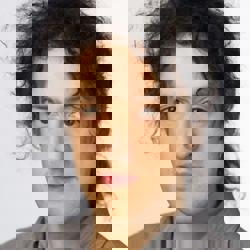
Philip Torr
Professor of Engineering Science & Five AI/Royal Academy of Engineering Research Chair in Computer Vision and Machine Learning
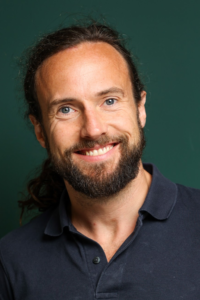
Jakob Foerster
Associate Professor
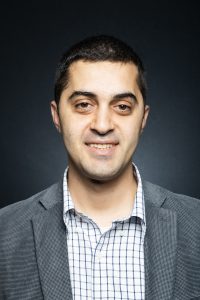
Amro Awad
Faculty Affiliate

Noa Zilberman
Faculty Affiliate

Fazl Barez
Technical AI Governance Lead, Senior Researcher and Principle Investigator

Tim G. J. Rudner
Faculty Affiliate